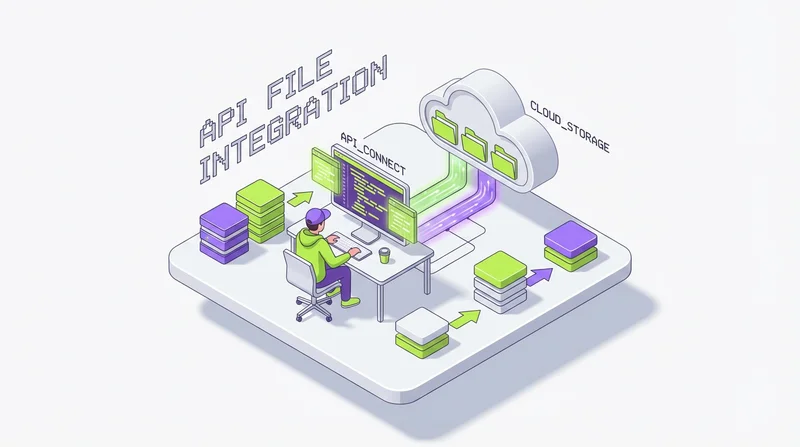
API integration enables programmatic file sharing – automate uploads, create shares, manage permissions, and integrate with other systems. This guide covers getting started with file sharing APIs.
Why Use API Integration
Automation
- Eliminate manual file uploads
- Automate share link creation
- Schedule recurring operations
System Integration
- Connect to CRM, ERP, project management
- Embed file sharing in your application
- Build custom workflows
Scale
- Handle high volumes efficiently
- Consistent, error-free operations
- No manual bottlenecks
Common API Operations
File Operations
- Upload – Send files to storage
- Download – Retrieve files
- List – Get folder contents
- Delete – Remove files
Sharing Operations
- Create link – Generate share URL
- Set password – Protect shares
- Set expiration – Time-limit access
- Revoke – Disable share links
Management Operations
- Create folders – Organize storage
- Set permissions – Control access
- Get statistics – Download counts, etc.
Integration Approaches
Direct API Calls
Make HTTP requests directly from your code:
POST /api/files/upload
Authorization: Bearer {token}
Content-Type: multipart/form-data
SDKs/Libraries
Use provided libraries for easier integration in your language.
Webhooks
Receive notifications when events occur (downloads, uploads, etc.).
Example Use Cases
CRM Integration
When deal closes, automatically share contracts with customer:
- CRM triggers webhook on deal close
- Your service calls file sharing API
- Creates password-protected link
- Updates CRM with link
Report Generation
Automated report distribution:
- Report system generates PDF
- Uploads via API
- Creates share link
- Sends notification email
Getting Started
- Get API credentials from account settings
- Review API documentation
- Test with simple operations
- Build out your integration
- Monitor and maintain
See workflow automation guide for more examples.